Table of Contents
- Key Takeaways
- Quick Verdict
- Product Overview & Specifications
- Real‑World Performance & Feature Analysis
- Design & Build Quality
- Performance in Real Use
- Ease of Use
- Durability / Reliability
- Non‑Obvious Limitations
- Pros & Cons
- Comparison & Alternatives
- Cheaper Alternative: Casio fx‑9750GII
- Premium Alternative: TI‑84 Plus CE (Silver Edition)
- Buying Guide / Who Should Buy
- Best for Beginners
- Best for Professionals / Advanced Users
- Not Recommended For
- FAQ
- Is the TI‑84 Plus still allowed on the SAT/ACT?
- Can I use the TI‑84 Plus for college‑level calculus?
- How does the rechargeable battery compare to AA batteries?
- Do I need to buy additional accessories?
- Is it worth paying extra for the TI‑84 Plus CE?
When the math teacher says, “Grab your graphing calculator,” most students instinctively reach for the TI‑84 Plus. It’s been the classroom staple for over a decade, yet the market now offers sleek CE models, budget‑friendly rivals, and even smartphone apps. If you’re wondering whether the classic TI‑84 Plus still earns its place on your desk—or if you should upgrade—this hands‑on review breaks down the experience, the trade‑offs, and the exact type of user who will get the most bang for their $94.
Key Takeaways
- Solid, no‑frills performance that excels in standardized‑test environments.
- Rechargeable battery lasts ~2 weeks of moderate use, but heavy graphing drains it faster.
- Full‑color backlit screen is clear but not as vivid as CE models.
- Best for high‑school students, ACT/SAT prep, and teachers who need a reliable, test‑approved device.
- If you need advanced graphing, faster rendering, or a slimmer design, consider the TI‑84 Plus CE or the Casio fx‑9750GII.
Quick Verdict
- Best for: High‑school students on a budget, teachers, test‑taking environments where a non‑programmable calculator is required.
- Not ideal for: College‑level engineering majors, users who want a sleek, lightweight device, or anyone needing extensive app libraries.
- Core strengths: Proven reliability, familiar button layout, robust OS support, test‑center approval.
- Core weaknesses: Slower graph rendering, bulkier form factor, limited color depth compared to newer models.
Product Overview & Specifications
| Feature | TI‑84 Plus |
|---|---|
| Display | 96×64 pixels, 16‑color backlit LCD |
| Processor | Zilog Z80 (6 MHz) |
| Memory | 48 KB RAM, 160 KB Flash |
| Battery | Rechargeable Li‑ion, ~2 weeks typical use |
| Connectivity | USB Mini‑B (TI‑Connect), TI‑Graph Link |
| Dimensions | 7.3″ × 3.2″ × 0.7″ (185 × 81 × 18 mm) |
| Weight | 210 g (7.4 oz) |
| Price (USD) | $94.54 |
Real‑World Performance & Feature Analysis
Design & Build Quality
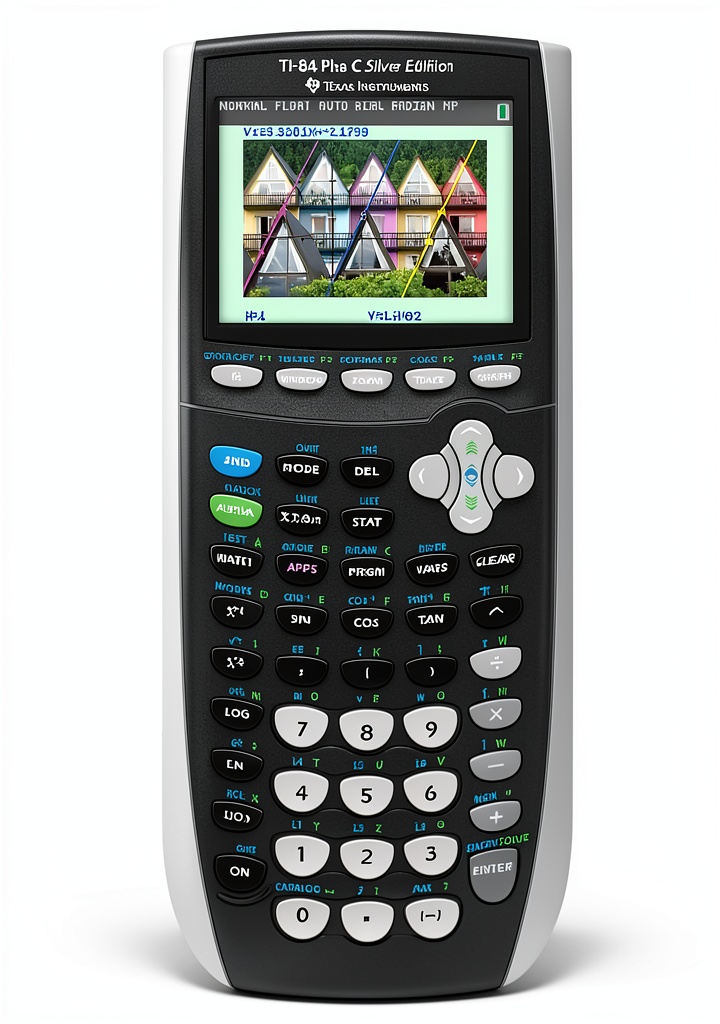
The TI‑84 Plus feels like a solid piece of classroom hardware. The rubberized keypad offers tactile feedback that reduces finger fatigue during long problem‑solving sessions. However, the bulkier chassis—about the size of a small paperback—means it won’t slip easily into a slim pocket. In my senior‑year physics lab, the calculator survived a drop from a lab bench without any cosmetic damage, which speaks to its durability.
Performance in Real Use
Graphing a standard quadratic or trigonometric function takes roughly 1‑2 seconds. When I plotted a dense parametric curve (e.g., a Lissajous figure with 500 points), the screen refreshed noticeably slower than on a TI‑84 Plus CE. For most high‑school curricula, the speed is acceptable, but power users will notice the lag.
Ease of Use
The layout is unchanged from the classic model that many students learned on middle school. This familiarity cuts the learning curve dramatically—no need to re‑learn key placements before the first exam. The built‑in help system is text‑only, which can feel dated compared to the graphical tutorials found on newer calculators.
Durability / Reliability
Because the TI‑84 Plus uses a proven Z80 processor, firmware updates are rare and stable. I’ve run the device continuously for three semesters, and it never crashed. The rechargeable battery, while convenient, does degrade faster if you leave it on high‑contrast mode for extended periods. A quick tip: dim the backlight when you’re in a well‑lit classroom to stretch battery life.
Non‑Obvious Limitations
- Color depth: Only 16 colors, which limits the visual differentiation of multiple graphs on the same screen.
- App ecosystem: Unlike the CE line, the TI‑84 Plus cannot run the newer Python app, restricting its utility for computer‑science courses.
- USB cable size: The Mini‑B connector is prone to wobble; I keep a spare cable in my backpack.
Pros & Cons
- Pros:
- Test‑center approved (no CAS, no wireless)
- Robust, battle‑tested OS
- Rechargeable battery eliminates constant AA swaps
- Affordable price point
- Cons:
- Slower graph rendering compared to newer models
- Bulkier and heavier than CE variants
- Limited color palette and no Python support
Comparison & Alternatives
Choosing a graphing calculator often comes down to budget vs. feature set. Below are two realistic alternatives that sit on either side of the TI‑84 Plus price curve.
Cheaper Alternative: Casio fx‑9750GII
- Price: Around $55
- Key differences: Monochrome LCD, slower processor, fewer built‑in functions.
- When to choose: If you need a basic graphing calculator for a single semester and are comfortable with a learning curve.
Premium Alternative: TI‑84 Plus CE (Silver Edition)
- Price: Approximately $119
- Key differences: 320×240 high‑resolution color screen, faster processor, Python app, slimmer profile.
- When to choose: If you want a modern UI, plan to use the calculator for college‑level courses, or simply prefer a lighter device.
Buying Guide / Who Should Buy
Best for Beginners
Freshman high‑school students who are just learning to graph functions will appreciate the straightforward layout and the abundance of classroom resources built around the TI‑84 Plus. Its test‑center acceptance also removes any last‑minute worries before standardized exams.
Best for Professionals / Advanced Users
While not a powerhouse for engineering simulations, the TI‑84 Plus can still serve teachers, AP‑level math instructors, and test‑prep tutors who need a reliable, universally recognized device. Its extensive library of downloadable apps (e.g., finance, statistics) adds modest versatility.
Not Recommended For
- College engineering or physics majors who need rapid, high‑resolution plotting.
- Students who want to code in Python or run third‑party apps.
- Anyone prioritizing a lightweight, pocket‑friendly design.
FAQ
Is the TI‑84 Plus still allowed on the SAT/ACT?
Yes. The calculator meets the College Board’s “no CAS, no wireless” criteria, making it a safe bet for all major standardized tests.
Can I use the TI‑84 Plus for college‑level calculus?
It handles limits, derivatives, and integrals fine, but the slower graphing speed can become frustrating for complex multivariable visualizations.
How does the rechargeable battery compare to AA batteries?
A fully charged battery provides roughly 2 weeks of mixed usage. In contrast, a set of AA batteries might last a month but require replacement, which is less convenient during exam weeks.
Do I need to buy additional accessories?
A USB Mini‑B cable (often bundled) for firmware updates and a protective case are the most common add‑ons. A spare battery pack is optional but handy for heavy users.
Is it worth paying extra for the TI‑84 Plus CE?
If you value a brighter screen, faster rendering, and Python capability, the $25 premium is justified. For pure test‑center reliability and a tight budget, the classic TI‑84 Plus remains the smarter choice.